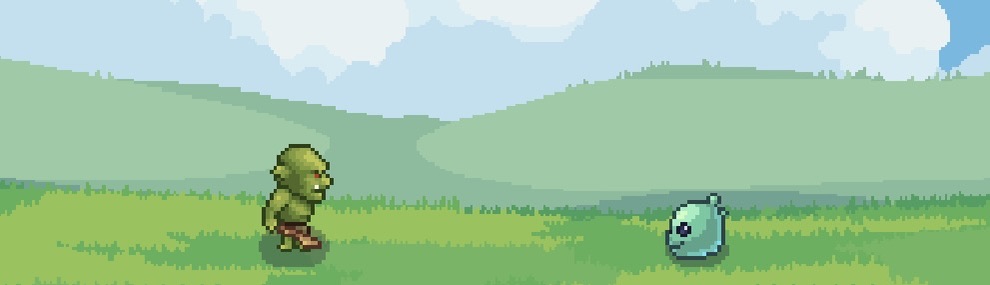
Tempest Chronicle is a personal and experimental game project developed as part of my game design and technical exploration.
The project currently exists as both a game concept and a playable web prototype, accessible directly through the browser.
The goal of this project is not to deliver a finished product, but to explore core design ideas inspired by classic JRPG structures, system-driven progression, and retro aesthetics.
The project serves as a sandbox for experimentation, iteration, and learning. A playable prototype is already available online, some mechanics are fully implemented, while others remain conceptual or in early development stages.
This devlog aims to document the project’s vision, inspirations, current state, and future direction in a transparent and structured way.
Playable prototype:
Universe & Narrative Inspiration
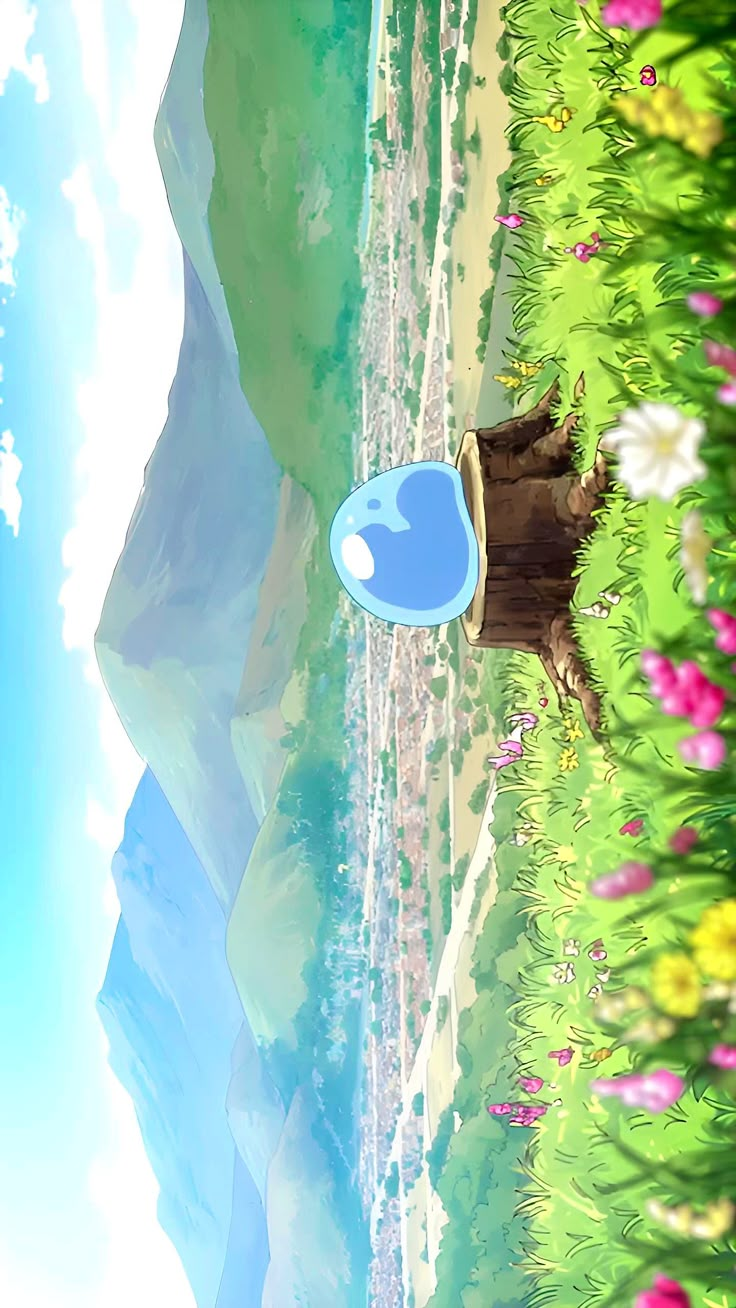
The world of Tempest Chronicle is directly inspired by the manga/anime That Time I Got Reincarnated as a Slime as a creative foundation.
Instead of placing the player in the role of a powerful hero, the story starts with a fragile and underestimated creature : a slime. Progression is not granted by destiny or status, but earned through adaptation, observation, and survival.
This idea strongly shaped the narrative direction of the project.
Designed as a colorful and accessible fantasy environment, composed of forests, caves, and small-scale ecosystems populated by creatures such as goblins. The tone is intentionally light and welcoming, sometimes slightly “kawaii”, while still presenting a world that can be hostile and unpredictable.
Placing a slime at the center of the experience allows the game to explore growth and transformation from a unique perspective. The player does not dominate the world immediately. Instead, they must learn how it functions, understand possibilities, and gradually adapt to it.
The inspiration lies in the themes, tone, and fantasy logic, not in narrative replication. This approach leaves room for original systems, mechanics, and design decisions to emerge as the project evolves.
Gameplay Inspiration — Classic JRPGs
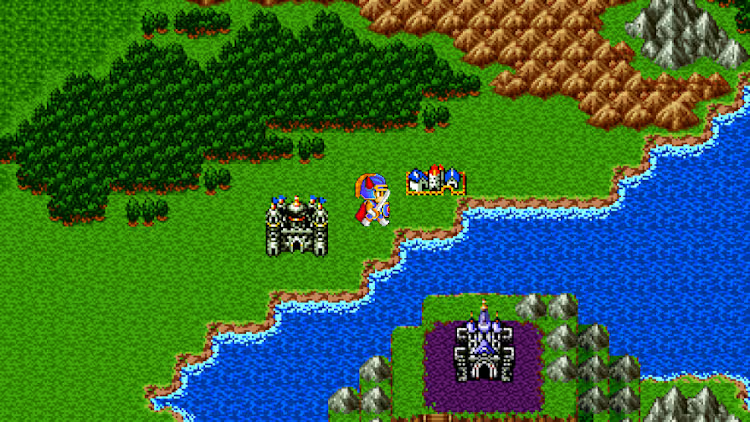
The gameplay foundations of Tempest Chronicle are heavily inspired by early Japanese role-playing games, particularly Dragon Quest I and Final Fantasy I.
These games were not chosen out of nostalgia alone, but because of the simplicity of their design philosophy.
Early JRPGs were built around simple, readable systems. The player was given a limited set of actions, clear feedback, and a strong sense of progression driven by repetition and mastery rather than complexity. Exploration, combat, and progression were tightly connected, forming a loop that was easy to understand but hard to optimize.
The influence of Dragon Quest I is particularly visible in the way exploration and combat are structured as complementary systems. Movement through the world is deliberate, while combat acts as a focused interruption that tests the player’s abilities.
The project embraces a classic top-down perspective and turn-based combat. This format allows the player to focus on decision-making, positioning, and progression without being overwhelmed by real-time action.
Rather than overwhelming the player with options, the design emphasizes gradual empowerment. Early encounters are straightforward, but over time the accumulation of abilities, levels, and systems creates depth. This mirrors the design philosophy of classic JRPGs, where depth emerged from repetition and system interaction
Another important influence is the sense of ownership over progression. In early JRPGs, growth felt earned through time, exploration, and risk. Tempest Chronicle aims to preserve this feeling by making progression the result of player engagement with the world, rather than a narrative or scripted.
By grounding the gameplay in these classic foundations, the project aims to create a familiar and accessible experience, while leaving room for experimentation. The result is a framework that feels immediately understandable, yet flexible enough to evolve as development continues.
Gameplay Loop
- Explore the World
- Encounter Enemies
- Turn-Based Combat
- Gain Progression
- Unlock New Paths
This structure ensures that exploration, combat, and progression are not isolated systems, but interconnected parts of a single experience.
World Exploration & Interaction
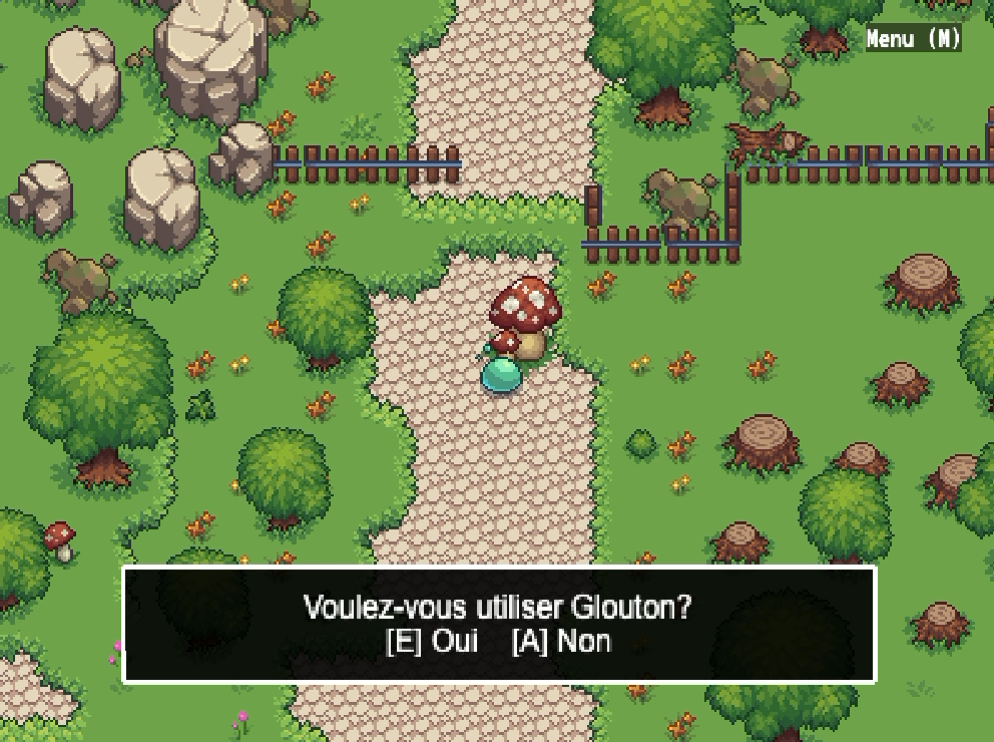
World exploration in Tempest Chronicle is built around free movement within interconnected environments. The game adopts a top-down perspective that allows players to clearly read the space around them and understand how different areas connect.
Rather than relying on abstract menus or overworld screens, the world is designed as a continuous space where exploration and encounters naturally emerge from movement. Enemies are placed directly within the environment, reinforcing the idea that the world itself is active and inhabited.
This approach encourages players to engage with space intentionally. Positioning, path selection, and awareness of surroundings all play a role in how the player navigates each area. Exploration becomes less about following a predefined route and more about understanding the layout of the environment.
Interaction with the world is currently limited. At this stage of development, interaction focuses on movement and combat initiation. However, the environments are designed with future expansion in mind, particularly regarding ability-based interactions.
The long-term intention is for progression to be reflected directly in how the player interacts with the world. As abilities are unlocked, the same spaces can be reinterpreted and revisited in new ways, reinforcing the connection between exploration and progression without introducing unnecessary complexity.
This design philosophy ensures that the world of Tempest Chronicle remains readable and accessible, while still providing a strong foundation for more advanced interaction systems as development continues.

Combat System
The combat system in Tempest Chronicle follows a classic turn-based JRPG structure.
This choice was made deliberately, to prioritize clarity, readability, and player decision-making.
Combat encounters are triggered through direct contact with enemies present in the world. This reinforces the continuity between exploration and combat, avoiding any separation between the two systems. The transition into battle is therefore contextual and spatial, rather than abstract or menu-driven.
During combat, the player has access to a limited but functional set of actions. These currently include basic attacks, abilities unlocked through level progression, and items. The system is intentionally restrained at this stage, allowing core mechanics to be tested, balanced, and iterated.
Turn-based combat emphasizes anticipation and choice rather than reflexes. Each action has a clear outcome, giving players time to understand the system and adapt their strategy. This approach aligns with the project’s broader goal of creating an accessible and readable gameplay experience.
At its current state, the combat system serves as a stable foundation. While additional mechanics and depth are planned for future iterations, the existing implementation already supports meaningful encounters and progression within the prototype.
Art Direction & Production Choices
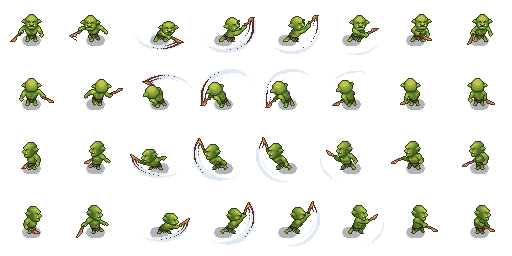
The art direction of Tempest Chronicle is rooted in retro JRPG aesthetics.
The use of pixel art is a creative choice meant to evoke the visual identity of early top-down role-playing games.
This aesthetic reinforces a sense of nostalgia while providing a familiar visual language for players who likes classic JRPGs. It also aligns naturally with the project’s gameplay structure, supporting clear spatial reading and consistent presentation across exploration and combat scenes.
From a production standpoint, the project adopts a pragmatic and experimental approach. Character and environment sprites are sourced from Craftpix.net , allowing rapid iteration and a focus on gameplay systems rather than asset creation during the early stages of development.
For battleground scenes and the title screen background, AI image generation was used. This choice enables the creation of cohesive atmospheres easily. These assets serve as placeholders and visual foundations rather than final art, supporting experimentation and iteration.
As the project evolves, the visual direction may be refined or unified further.

Music & Audio Direction
Music plays an important role in shaping the atmosphere of Tempest Chronicle, particularly in reinforcing its retro identity and sense of adventure.
The soundtrack used in the current prototype is composed by xDeviruchi, taken from the 8-Bit Fantasy and Adventure Music Pack.
This collection perfectly complements the project’s pixel art visuals and classic JRPG inspirations, blending chiptune aesthetics with melodic and adventurous compositions.
🎵 Music pack source:
https://xdeviruchi.itch.io/8-bit-fantasy-adventure-music-pack
At this stage of development, audio is treated as a foundational layer that supports immersion and identity, while remaining flexible for future iteration or replacement depending on the project’s evolution.

Mobile Version & Retro Controls
In addition to the desktop experience, Tempest Chronicle includes a fully playable mobile version, accessible directly through the web browser.
When the game is launched on a mobile device, a dedicated touch interface is displayed. This interface features a virtual directional pad along with three action buttons: A, B, and Start. The layout is intentionally inspired by classic handheld consoles, such as the Game Boy.
Rather than designing a generic mobile control scheme, the goal was to preserve the project’s retro identity across platforms. By mirroring the visual language and input logic of classic hardware, the mobile version feels consistent with the game’s overall aesthetic and design philosophy.
This approach also reinforces accessibility. The game can be played without mouse or keyboard, while still offering precise and familiar inputs adapted to touch screens. Players can experience the full gameplay loop on mobile devices without compromising core mechanics.

Current State of the Project
Tempest Chronicle is currently developed as a playable web prototype, serving both as a proof of concept and as a foundation for further experimentation. The project is considered a work in progress.
Implemented Features
At its current stage, the prototype includes the core systems required to support the main gameplay loop.
World exploration is fully functional, allowing the player to navigate environments from a top-down perspective. Enemies are visible within the world and encounters are triggered through direct contact, ensuring continuity between exploration and combat.
The combat system is implemented as a classic turn-based structure. Players can perform basic attacks, use abilities unlocked through level progression, and rely on healing items during encounters.
Basic progression systems are also in place. The player gains experience through combat, levels up, and unlocks new abilities.
Features in Development
Several key mechanics are currently planned or under active development.
The absorption-based progression system (referred to as the “Glutton” mechanic) is partially implemented. This system is intended to become a central pillar of progression, allowing players to acquire abilities through enemy interaction rather than solely through leveling.
Level progression and balancing are also ongoing areas of work. The current progression curve requires refinement to ensure smoother difficulty scaling and better pacing.
Environmental interaction is another focus for future development. Although the world structure is designed with interaction in mind, most ability-based interactions with the environment remain conceptual at this stage.
Finally, enemy variety is limited in the current prototype, with only a small set of enemy types available. Expanding this variety is essential for both gameplay depth and progression experimentation.
As an experimental project, the prototype contains known issues and limitations. Certain systems may feel incomplete or unbalanced, and some interactions may behave inconsistently. These limitations are acknowledged and documented as part of the iterative development process.
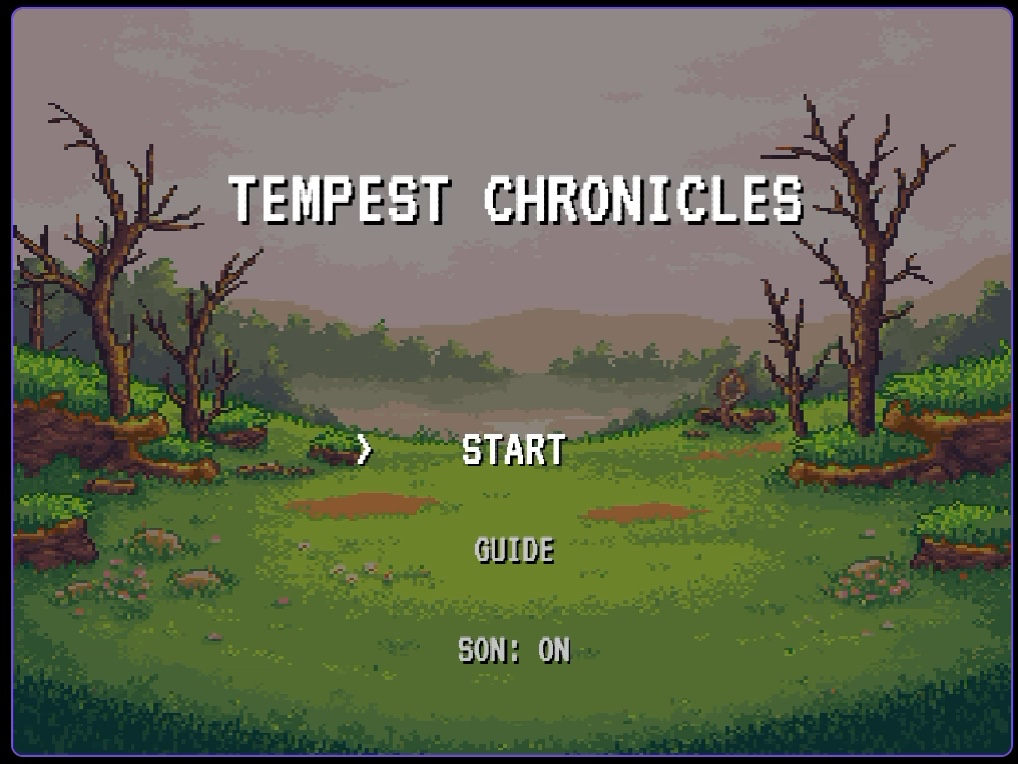
Play the Prototype
Tempest Chronicle is available as a playable web prototype, accessible directly through a web browser on both desktop and mobile.
This prototype represents the current state of the project. The core gameplay loop, exploration, and combat systems are already playable.
Play the prototype here:
Feedback, observations, and discussions are always welcome. Contact me on instagram @giberne.dev
The project is actively evolving, and each iteration helps refine both the design direction and the underlying systems.